
The Ultimate Guide to Understanding and Managing Feline Anxiety
As a devoted cat owner, you might have noticed your feline friend acting a bit more skittish or withdrawn than usual. It’s not uncommon for cats to experience anxiety, and just like us humans, they can become overwhelmed by certain stressors. Recognizing and addressing feline anxiety is crucial for maintaining your cat’s overall health and happiness. In this comprehensive guide, we’ll explore the ins and outs of feline anxiety, offering practical advice and insights to help you support your beloved pet.
Understanding that our cats might be stressed can be unsettling. However, with the right tools and knowledge, cat owners can help alleviate these feelings and create a soothing environment for their furry companions. Whether you’re a seasoned cat parent or a new cat owner looking for tips, this guide aims to provide you with the information you need to help your cat live a peaceful, anxiety-free life. So, grab a cup of tea, settle in, and let’s explore the world of feline anxiety together.
Key Takeaways
- Feline anxiety can manifest in various ways, such as hiding, aggression, or excessive grooming.
- Identifying the root cause of your cat’s anxiety is the first step in managing it effectively.
- Environmental enrichment and routine can significantly reduce anxiety in cats.
- Consulting with a veterinarian can provide insights and potential treatments for severe anxiety.
- Patience and understanding are key to helping your cat overcome anxiety.
Main Content Section 1
Feline anxiety is a common issue that many cat owners encounter. It can be triggered by a variety of factors, including changes in the household, unfamiliar people or animals, or even loud noises. Understanding these triggers is essential in helping your cat feel more secure and less anxious. As cat owners, it’s important to observe any changes in behavior that might indicate stress and address them promptly.
Some typical signs of anxiety in cats include hiding, aggression, and changes in appetite or litter box habits. You might also notice your cat grooming excessively or vocalizing more than usual. These behaviors can be distressing for both you and your cat, but recognizing them early can help you intervene more effectively.
The key to managing your cat’s anxiety is to first identify the specific triggers. Once you understand what is causing your cat to feel anxious, you can begin to implement strategies to reduce these stressors and provide a more comforting environment for your pet.
Main Content Section 2
Creating a supportive environment is crucial for managing feline anxiety. Cats thrive on routine, so maintaining a consistent schedule for feeding, playtime, and bedtime can help reduce anxiety levels. Additionally, providing plenty of enrichment activities can keep your cat mentally stimulated and less focused on stress-inducing factors.
Environmental enrichment can include interactive toys, scratching posts, and designated spaces where your cat can retreat and feel safe. Ensuring that your cat has access to vertical spaces, such as cat trees or shelves, can also offer a sense of security and control over their environment.
If your cat’s anxiety seems severe or persistent, consulting with a veterinarian is a wise decision. They can rule out any underlying health issues that might be contributing to the anxiety and recommend appropriate treatments, which may include behavioral therapy or medication in some cases.
Step-by-Step Guide
- Observe your cat’s behavior to identify any signs of anxiety, such as hiding or aggression.
- Determine potential triggers by considering recent changes in the household or environment.
- Implement a consistent routine to provide stability and predictability for your cat.
- Incorporate environmental enrichment with toys, scratching posts, and safe spaces.
- Consult with a veterinarian to explore further treatment options if anxiety persists.

Pro Tips
- Use pheromone diffusers to create a calming atmosphere for your cat.
- Introduce new changes gradually to avoid overwhelming your cat.
- Provide plenty of opportunities for play and exercise to reduce stress.
- Ensure your cat has access to a quiet, comfortable area to retreat to when needed.
- Consider using calming supplements or treats designed for cats.
Common Mistakes to Avoid
- Ignoring signs of anxiety and dismissing them as normal behavior.
- Making sudden changes to your cat’s environment or routine without preparation.
- Punishing your cat for anxiety-driven behaviors, which can worsen the issue.
- Neglecting regular veterinary check-ups that can uncover hidden health problems.
- Overlooking the importance of mental and physical stimulation.
Frequently Asked Questions
- What are common signs of anxiety in cats?
- Common signs include hiding, aggression, changes in appetite, excessive grooming, and increased vocalization.
- Can changes in the household cause my cat to become anxious?
- Yes, changes such as moving, new pets, or new family members can trigger anxiety in cats.
- How can I help my cat feel more secure?
- Maintain a consistent routine, provide safe spaces, and use calming aids like pheromone diffusers.
- Should I consult a veterinarian for my cat’s anxiety?
- Yes, especially if the anxiety is severe or persistent, consulting a veterinarian can provide guidance and treatment options.
- Are there treatments available for feline anxiety?
- Yes, treatments can include behavioral therapy, environmental changes, and in some cases, medication prescribed by a vet.
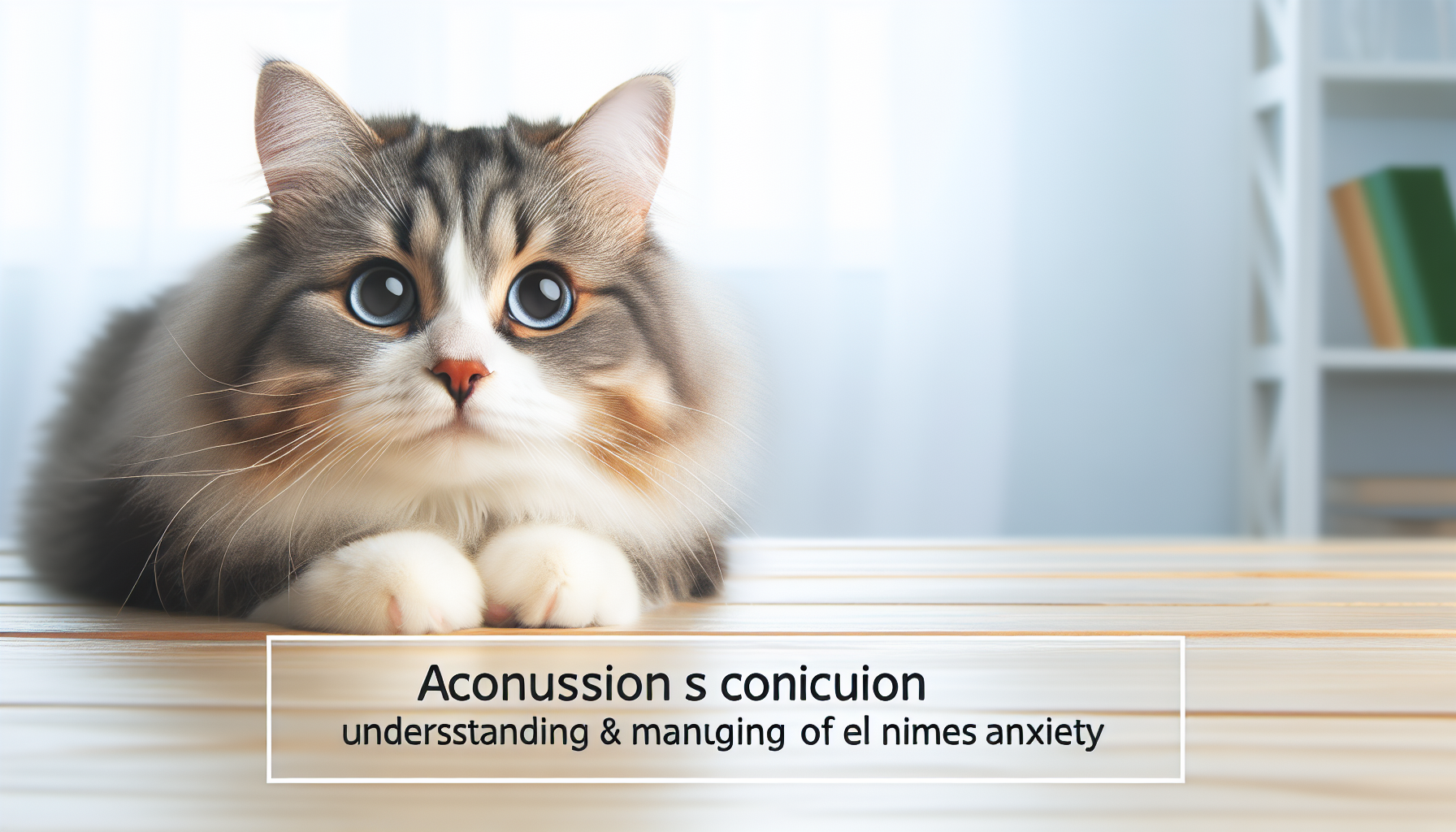
Conclusion
Understanding and managing feline anxiety is an essential aspect of cat care that can significantly improve your pet’s quality of life. By recognizing the signs and implementing strategies to alleviate stress, you can help your cat feel more secure and content. Remember that patience and compassion are key, and don’t hesitate to seek professional help if needed. With the right approach, you and your furry friend can navigate through anxiety and enjoy a happier, healthier life together.